
Role of AI in Branding: Elevating Identity and Impact
Discover the role of AI in branding, from automated design and smart personalization to async video branding and global reach using voice tech.
Devdeep
Author
Role of AI in Branding: Elevating Identity and Impact

Most American businesses are rapidly embracing Artificial Intelligence to strengthen their branding, yet many leaders underestimate just how deep this transformation goes. The pressure to stand out in a crowded digital market makes AI strategies more than just a trend. With over 80 percent of American companies planning to increase their investment in AI-driven marketing, understanding the core concepts behind this technology can help brands build a lasting and memorable presence.
Table of Contents
Key Takeaways
| Point | Details |
|---|---|
| AI Transforms Branding | AI enables personalized and dynamic interactions, shifting from static marketing to intelligent, adaptive communications. |
| Critical AI Technologies | Key technologies like Natural Language Processing and Predictive Analytics enhance brand strategies through data-driven insights. |
| Ensuring Brand Consistency | AI tools maintain uniform messaging across platforms by analyzing and correcting variations in real time. |
| Ethical Considerations | Brands must address algorithmic biases and ensure transparency to maintain consumer trust and authenticity in AI-driven interactions. |
AI in Branding: Core Concepts Explained
- AI In Branding: Core Concepts Explained
- Types Of AI Technologies In Branding
- How AI Enhances Brand Consistency
- Personalization And Customer Engagement With AI
- Risks, Limitations, And Ethical Factors In AI Branding
Artificial Intelligence (AI) is transforming brand identity and strategic communication in unprecedented ways. By integrating advanced machine learning algorithms and data analysis techniques, AI enables brands to create more personalized, responsive, and dynamic interactions with consumers. Understanding the strategic framework of AI integration reveals three critical capabilities: mechanical, thinking, and feeling functions that revolutionize marketing approaches.
The core mechanics of AI in branding involve sophisticated data processing and predictive modeling. Brands can now leverage AI to analyze consumer behavior patterns, predict market trends, and develop hyper-targeted marketing strategies with remarkable precision. Mechanical capabilities allow AI systems to rapidly process massive datasets, identifying subtle consumer preferences and demographic insights that traditional research methods might overlook.
Moreover, AI's "thinking" capabilities go beyond data analysis. Integrated brand management frameworks demonstrate how AI can dynamically mediate consumer-brand relationships by generating intelligent content, personalizing communication channels, and creating adaptive brand experiences. These intelligent systems can:
- Generate contextually relevant brand messaging
- Predict consumer sentiment and engagement potential
- Customize visual and verbal brand elements in real time
- Develop predictive models for brand perception
The emerging paradigm of AI-driven branding represents a profound shift from static, one-size-fits-all communication strategies to intelligent, responsive brand interactions that feel uniquely tailored to individual consumers.
Types of AI Technologies in Branding
Artificial Intelligence has evolved into a multifaceted technological ecosystem that enables brands to reimagine their communication and design strategies. Generative AI design technologies represent a groundbreaking approach, leveraging advanced multimodal interfaces and structured prompting to create dynamic brand experiences that adapt in real time. These technologies are revolutionizing how brands conceptualize and execute their visual and narrative identities.
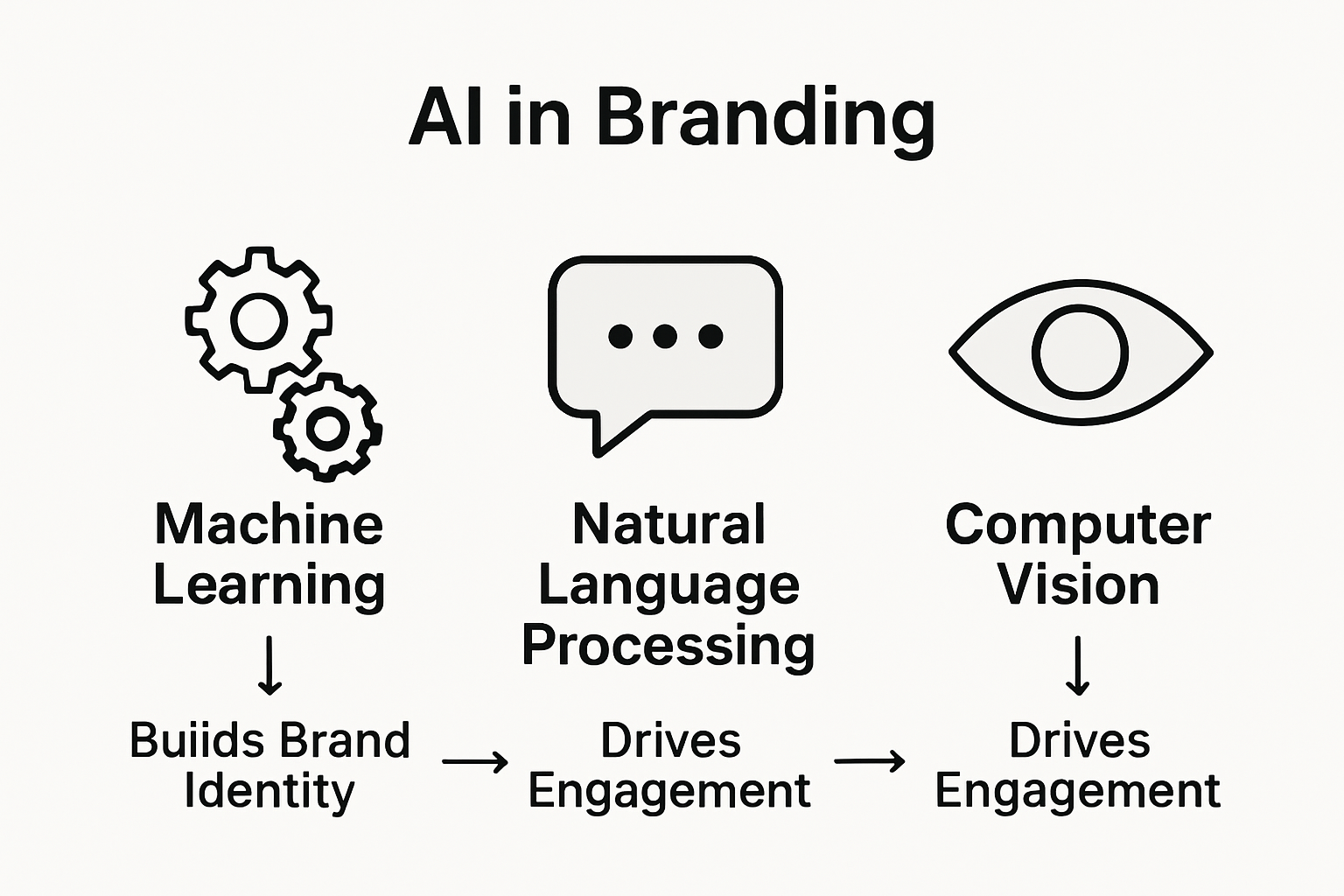
Machine Learning Algorithms play a crucial role in understanding and predicting consumer behavior. Through sophisticated pattern recognition and data analysis, these technologies enable brands to develop hyper-personalized marketing strategies. Brands can now deploy AI systems that continuously learn from consumer interactions, creating increasingly nuanced and responsive communication channels. Research on AI-generated brand personalities demonstrates remarkable effectiveness in shaping consumer preferences and purchase intentions.
The primary categories of AI technologies transforming branding include:
- Natural Language Processing (NLP): Enables intelligent content generation and sentiment analysis
- Computer Vision: Facilitates advanced visual branding and design adaptation
- Predictive Analytics: Helps forecast market trends and consumer behavior
- Generative AI: Supports creative content and design development
These technologies work synergistically to create intelligent, responsive brand ecosystems that can dynamically adjust messaging, visual design, and consumer engagement strategies in ways previously unimaginable.
How AI Enhances Brand Consistency
Brand Consistency has become a sophisticated challenge in the digital age, with brands needing to maintain uniform messaging across multiple platforms and channels. AI-powered brand identity strategies provide sophisticated mechanisms for ensuring uniformity in voice, tone, and visual representation across complex digital ecosystems. By implementing intelligent algorithms, brands can now monitor and adjust their communication in real time, creating a seamless and integrated brand experience.

AI technologies excel at analyzing and standardizing brand communication through advanced linguistic and visual pattern recognition. These systems can automatically detect and correct variations in brand messaging, ensuring that every piece of content adheres to predefined brand guidelines. Sophisticated AI tools for brand messaging enable precise proofreading, editing, and benchmarking, which helps maintain clarity and consistency across all communication channels.
The key mechanisms of AI-driven brand consistency include:
- Tone Detection: Analyzing communication patterns to ensure consistent brand voice
- Visual Style Matching: Automatically aligning graphic elements with brand guidelines
- Content Validation: Checking all materials against established brand standards
- Adaptive Learning: Continuously refining brand communication strategies
By leveraging these intelligent technologies, brands can create a unified, recognizable identity that resonates consistently across diverse digital platforms, ultimately building stronger and more reliable connections with their target audiences.
Personalization and Customer Engagement with AI
Customer Personalization has become the cornerstone of modern brand strategy, with AI technologies revolutionizing how businesses interact with their audiences. AI-driven personalization strategies in cross-border e-commerce demonstrate remarkable capabilities in creating tailored experiences that transcend traditional marketing approaches. By analyzing complex behavioral patterns and consumer data, AI enables brands to craft messaging and interactions that feel uniquely designed for individual users.
Advanced machine learning algorithms now process vast amounts of customer data to generate hyper-personalized engagement strategies. Sophisticated AI analysis of customer interactions allows brands to understand nuanced consumer preferences with unprecedented depth. These intelligent systems can predict customer needs, anticipate potential pain points, and dynamically adjust communication styles in real time, creating a more responsive and intuitive brand experience.
Key mechanisms of AI-powered personalization include:
- Predictive Behavior Modeling: Anticipating customer preferences before explicit expression
- Dynamic Content Adaptation: Tailoring messaging and visuals to individual user profiles
- Emotional Intelligence Mapping: Understanding subtle emotional cues in customer interactions
- Contextual Recommendation Engines: Suggesting products and services based on comprehensive user insights
By embracing these intelligent personalization technologies, brands can create deeper, more meaningful connections with their audiences, transforming traditional transactional relationships into dynamic, empathetic interactions that feel genuinely individualized and responsive.
Risks, Limitations, and Ethical Factors in AI Branding
Ethical AI Branding represents a complex landscape where technological potential intersects with critical moral considerations. Research into AI-generated brand personalities reveals significant challenges in maintaining authentic brand representation while navigating potential algorithmic biases and consumer perception risks. Brands must carefully balance technological innovation with genuine human-centric values to prevent potential misrepresentation or manipulation.
The integration of AI into branding strategies introduces multifaceted ethical challenges that require nuanced understanding. UX practitioners face complex considerations when implementing AI design technologies, particularly in ensuring transparent communication and maintaining genuine user trust. These challenges demand robust frameworks that prioritize accountability, user consent, and clear disclosure of AI-driven interactions.
Key ethical considerations in AI branding include:
- Algorithmic Bias Detection: Identifying and mitigating potential discriminatory patterns
- Transparency in AI Decision Making: Clearly communicating AI-generated content and processes
- User Consent and Data Privacy: Protecting individual user information and autonomy
- Authenticity Verification: Ensuring AI-generated content maintains brand integrity
- Emotional Impact Assessment: Understanding psychological implications of AI interactions
Successful AI branding requires a holistic approach that views technological capabilities through a critical ethical lens, prioritizing human values, user experience, and genuine brand connection over pure technological efficiency.
Elevate Your Brand Consistency and Personalization with AI-Powered Video by Boom
The article "Role of AI in Branding: Elevating Identity and Impact" highlights the challenges brands face in maintaining consistent messaging across platforms while crafting personalized, emotionally intelligent communication. Key pain points include ensuring brand tone uniformity, delivering adaptive content, and engaging customers dynamically without losing authenticity or responsiveness. These issues require innovative AI solutions that streamline brand storytelling without sacrificing human connection or creative control.
Boom offers the perfect answer to these challenges by combining AI-driven features like instant scripting, voice-to-video recording, and AI voiceover with seamless async workflows. With tools designed for on-brand video templates, automatic multilingual dubbing, and collaborative comment threads, Boom empowers freelancers, marketers, and teams to create consistent, personalized content effortlessly. Explore how Boom can transform your brand interactions without the headache of endless meetings at Boom homepage. Perfect your messaging with AI-guided clarity and save valuable time through async communication.
Want to make your brand’s voice truly stand out and stay consistent across every message?

Discover the future of brand communication and async video at Boom. Start creating polished, on-brand videos in minutes and take control of your brand identity today.
Frequently Asked Questions
What are the core capabilities of AI in branding?
AI enhances branding through mechanical, thinking, and feeling functions, allowing brands to analyze data, generate intelligent content, and create personalized experiences.
How does AI improve brand consistency?
AI uses sophisticated algorithms to ensure uniform messaging across various platforms by detecting variations in tone and visual style, maintaining a cohesive brand identity.
In what ways can AI personalize customer engagement?
AI enables hyper-personalized customer interactions by analyzing behavioral patterns, predicting preferences, and dynamically adjusting messaging to individual users.
What ethical considerations should brands keep in mind when using AI?
Brands must address algorithmic bias, transparency in AI decision-making, user consent, and ensure the authenticity of AI-generated content to maintain consumer trust.
Recommended
About the Author
Devdeep
Senior Software Engineer.